
DONE UNDER?
Australia might yet become a key producer for future fuels, but things are looking much less rosy right now, John Rickards writes
What a difference a year can make. Back in the heady days of 2024, the Pilbara region of Western Australia seemed on course to become the hub for a new wave of green hydrogen-derived bunker fuels. Mining corporations looking to decarbonise their operations, including shipping, helped by massive subsidies from the government, would use e-fuels generated via the centrepiece 26 GW Australian Renewable Energy Hub (AREH), while exports to Asian and European markets would go a long way to clearing early availability hurdles and help uptake across the shipping industry in Australia and internationally.
And then 2025 rolled around and a lot of feet started getting very cold. With initial costs of the technology higher than expected, practical barriers still needing overcoming, and uptake uncertain, the political winds shifted.
First the West Australian government dropped plans to introduce hard emissions limits which would have helped drive hydrogen’s uptake; the mining-heavy state was the only one in Australia without 2050 legislation. The state’s Liberal Party then went further and joined its counterparts elsewhere in Australia, by rejecting net-zero policies altogether. Then the Queensland government pulled financial support for its own mooted hydrogen export hub. Meanwhile the federal opposition has turned against previously bipartisan government hydrogen tax credits while the government refocused its hydrogen programs to projects that will bring down costs and overcome hurdles in demand as well as supply.
BP, which owned a 63.7% stake in AREH, then announced in July 2025 that it was out. This followed a company-wide “strategy reset” to head off a revolt by shareholders opposed to long-term investments in post-fossil energy, reducing green energy spending to less than 5% of BP’s outlay.
The lack of state political incentives that would make it easier to bring hydrogen costs in line with conventional fuels was in turn a factor that led even iron and green energy company Fortescue, which in 2024 participated in the first demonstration of ammonia bunkering in Australia, to scale back or shift plans to develop hydrogen fuel production and bunkering. The company was similarly deeply disappointed by the failure to move forward with net-zero rules at the IMO in October.
“Fortescue is disappointed by the delay in adopting the International Maritime Organization’s Net Zero Framework — a landmark proposal that would have set global shipping on a clear course toward decarbonisation,” the company said. “After years of negotiation and broad international support, today’s outcome represents a lost opportunity for the world to take collective, decisive action on one of the hardest-to-abate sectors. While some countries chose to defer progress, the direction of travel for shipping is already clear. The transition to zero-emission fuels is inevitable — and the technologies to enable it already exist.”
However, it’s not all been bad news. MOL, which was also a partner in the first Australian ammonia bunkering in 2024, announced that it has signed an MOU with NH3 Clean Energy and Oceania Marine Energy to develop ammonia bunkering at Port Dampier in the Pilbara. The Pilbara Clean Fuels Bunkering Hub initiative which is Australia’s first ammonia bunkering concept, and was announced by the Pilbara Ports Authority in June 2025.
Ports Minister Stephen Dawson said: “The launch of Pilbara Ports ‘Pilbara Clean Fuel Bunkering Hub Strategy’ is a pivotal step forward for Western Australia’s clean energy future. By enabling clean fuel bunkering in the Pilbara, we are helping global shipping reduce emissions while unlocking new economic and industrial opportunities for the State. If we are to reach net zero targets by 2050 all sectors of the economy have a role to play.”
The only fly in the ointment is that NH3’s ammonia is currently blue rather than green, but – future availability of the latter in the Pilbara allowing – it should be a step on the road. If it can survive another year.
11/12/25
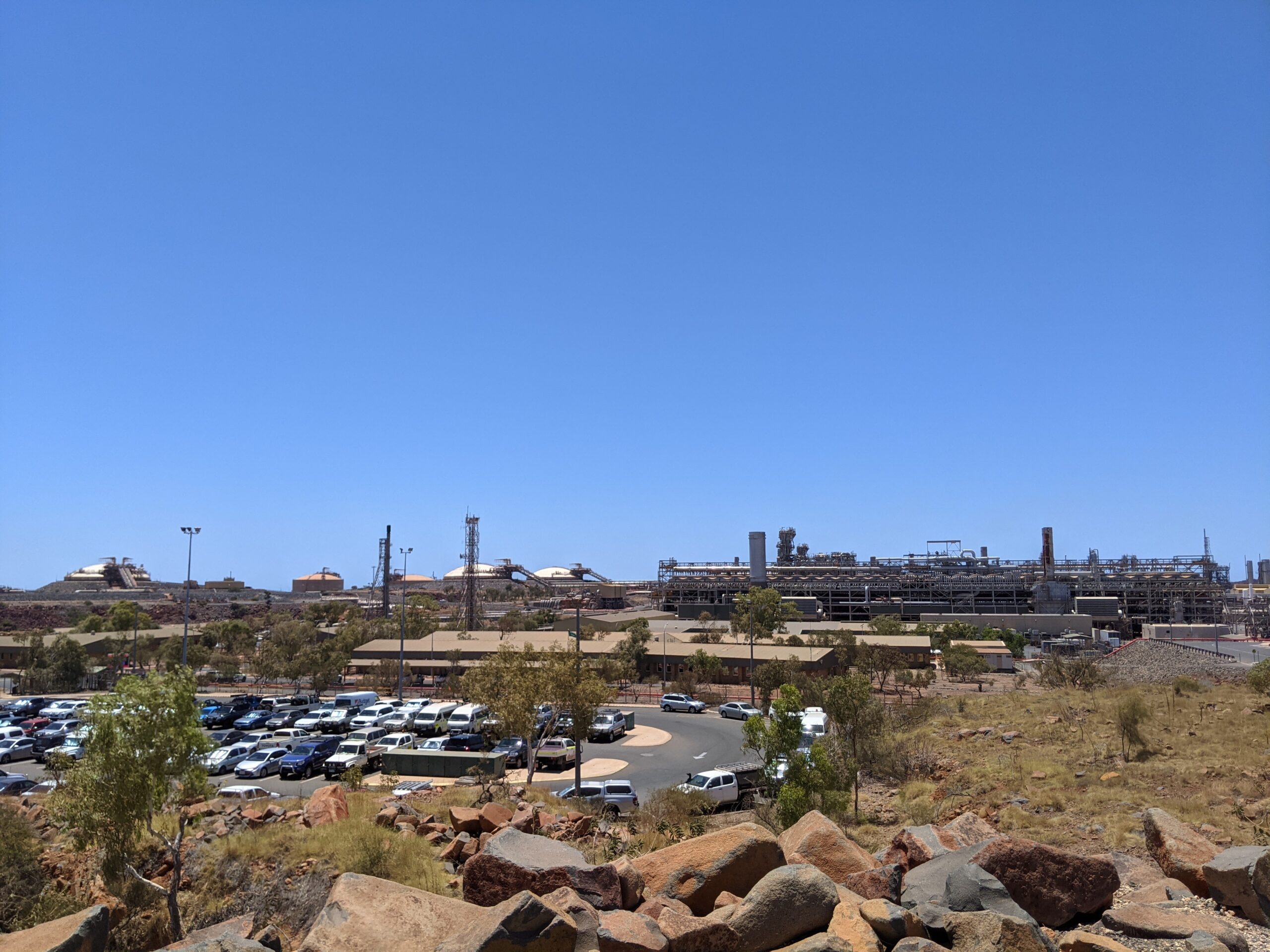
Image Caption: The mining ports of the Pilbara are the lynchpin of the country’s green fuel ambitions.
Image Credit: US Embassy Australia/CC-BY
get
in touch

Constructive Media
Constructive Media
Hornbeam Suite
Mamhilad House
Mamhilad Park Estate
Pontypool
NP4 0HZ
Tel: 01495 239 962
Email: ibia@constructivemedia.co.uk

On behalf of:
IBIA London Office
Suite Lu.231
The Light Bulb
1 Filament Walk, Wandsworth
London, SW18 4GQ
United Kingdom
Tel: +44 (0) 20 3397 3850
Fax: +44 (0) 20 3397 3865
Email: ibia@ibia.net
Website: www.ibia.net

Emails
Publisher & Designer: Constructive Media
ibia@constructivemedia.co.uk
Editor: David Hughes
anderimar.news@googlemail.com
Project Manager: Alex Corboude
alex@worldbunkering.net