
Getting Real
As digitalisation accelerates across the bunker sector, AI is moving from buzzword to practical tool
Many in the sector now see AI as one of several technologies that will shape how fuel is bought, delivered, consumed and monitored over the coming decade, alongside mass flow metering, electronic documentation and expanded data sharing.
Bunkering is increasingly being shaped by three overlapping forces: fuel-price volatility, tightening environmental regulation and a protracted transition toward lower-carbon shipping. Industry reports generally agree that carbon-neutral fuels are likely to remain expensive and limited in availability for years, leaving owners and charterers under pressure to improve efficiency while gradually introducing new fuels and propulsion concepts.
This environment generates growing volumes of operational and commercial data – from noon reports and sensor streams to lab certificates, port calls, invoices and contracts. For many stakeholders, AI is seen primarily as a way to turn this fragmented and sometimes inconsistent data into more reliable support for decisions on what to buy, where to lift, how much to stem and how fuel is used on board.
A broad consensus appears to be emerging that AI will not, on its own, transform bunkering overnight. Instead, it is expected to become part of the background infrastructure of the business, in much the same way that mass flow meters and electronic documentation have already done in some hubs.
Digital bunkering as the runway for AI
The steady advance of digital bunkering is widely regarded as a prerequisite for meaningful AI deployment. In Singapore and a number of other major ports, regulators are moving toward electronic bunker delivery notes and standardised data formats. In parallel, the IMO’s Maritime Single Window initiative is encouraging ports and national authorities to adopt more unified digital platforms for ship–shore data exchange.
Once bunker deliveries, customs information and port calls are captured in structured, machine-readable form, AI tools can be applied more effectively. Industry participants point to several immediate applications: benchmarking suppliers, identifying anomalies, automating reconciliation, and reducing the scope for disputes over quantity, quality or documentation.
Procurement: from price per tonne to “single point of truth”
Much of the current discussion around AI in maritime procurement focuses on data quality and governance. At GenPro’s 5th Annual Blue Day in Limassol, held under the theme “Single Point of Truth: Turning AI into Action in Sourcing and Procurement”, speakers repeatedly stressed that AI systems depend on consistent, reliable input data.
GenPro managing director Maria Theodosiou told delegates that AI “cannot fix chaos” and “is not magic”, noting that poorly structured data can lead to faster but not better decisions. That observation resonates with bunker buyers who work with multiple price sources, catalogues and contract templates. Even minor discrepancies in part numbers, currencies or product descriptions can undermine confidence in AI-generated output.
From a bunkering perspective, many observers therefore emphasise the importance of building a robust “single point of truth” for core data: vessel profiles, historical consumption, fuel grades and specifications, quality records, contract terms and counterparty information. AI is then seen as a layer on top of that foundation rather than a short-cut around it.
Christina Orfanidou, Head of Group AI at Columbia Group, highlighted the regulatory dimension, citing the EU AI Act and the introduction of ISO 42001 for AI management systems. She suggested that data governance, including classification schemes, quality indicators and clear ownership of datasets, is becoming integral to responsible AI use. For bunker buyers, this aligns with a wider move to treat price, quality and counterparty data with the same rigour historically applied to financial reporting.
Exelia Technologies CEO Margarita Maimonis, speaking at the same event, emphasised incremental implementation. She argued that successful projects tend to start with digitising specific processes and tackling realistic use cases, rather than attempting an end-to-end AI transformation from the outset. Applied to bunkering, that approach could mean beginning with AI-assisted supplier benchmarking on selected trades, or automating reconciliation between e-BDNs and invoices, before pursuing more ambitious concepts.
Beyond price per tonne: energy, risk and emissions
Traditional bunker negotiations have largely focused on the headline price per tonne. A growing number of technology providers and fuel managers are now promoting broader metrics that incorporate energy content, operational performance and regulatory exposure.
AI-enabled platforms are being developed to aggregate fuel-quality data, port-by-port, and combine it with price assessments, fleet trading patterns, weather forecasts and compliance constraints. The aim is to move towards questions such as:
Given a particular trading pattern, where should a vessel bunker, which grade should be used, how much should be lifted, and what are the implications for total cost and emissions?
By modelling energy content, expected consumption, Carbon Intensity Indicator (CII) performance and exposure to schemes such as the EU Emissions Trading System (ETS), these tools seek to present bunker managers with scenario-based options rather than a single ‘cheapest’ number.
In parallel, risk-intelligence providers are using AI to screen sanctions lists, vessel behaviour and ownership structures. For bunker traders and suppliers, such tools are increasingly seen as a way to manage a rising compliance burden, particularly in relation to sanctions, beneficial ownership and ‘dark fleet’ concerns.
Industry opinion generally reflects the view that these applications are evolutionary rather than revolutionary, extending existing analytical practices rather than replacing them.
Case study: AI on the bridge
The application of AI to navigation and situational awareness illustrates how fuel efficiency, safety and ESG considerations can intersect. Shipowner Harren Group’s partnership with Orca AI has been cited as an example of how real-time data from the bridge can be used to inform both operational and strategic decisions.
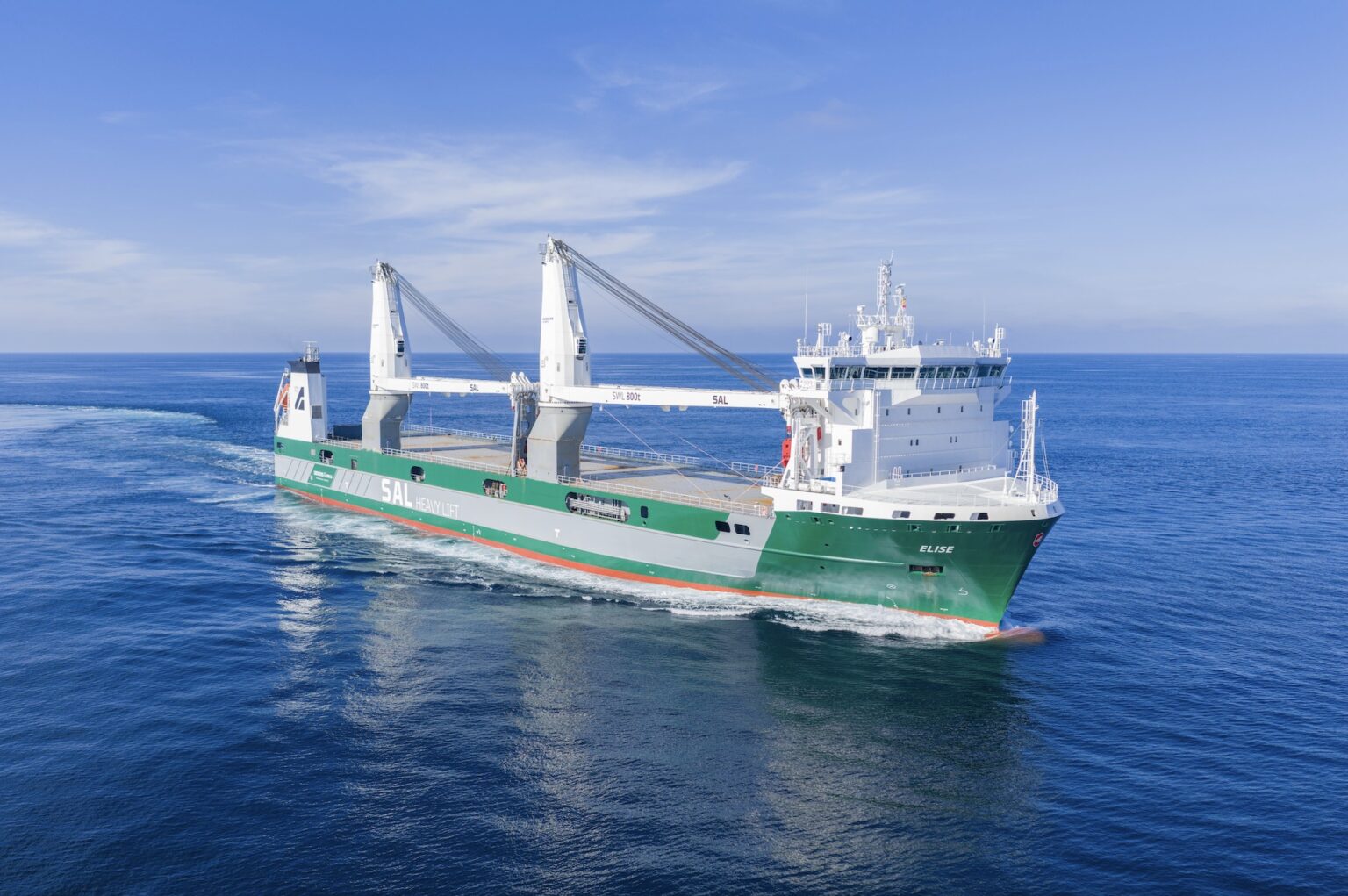
Harren’s newer heavy-lift and multipurpose vessels are equipped with highly efficient engine and propulsion systems designed to minimise emissions. The integration of marine technology company Orca AI adds an additional layer of intelligence via the SeaPod ‘digital lookout’, which combines visual and thermal sensors, and the FleetView platform, which aggregates navigational events across the fleet.
According to Harren’s managing director Nils Aden, the goal is to measure navigational behaviour in a way that was previously not feasible and to align ship and shore personnel around a common factual picture. The company has set targets to reduce close-quarters situations and near misses, on the basis that smoother and more predictable manoeuvring is positive for both safety and fuel consumption.
Orca AI co-founder and CEO Yarden Gross presents this type of deployment as representative of a broader industry trend. He argues that combining real-world navigational data with AI-driven analysis can support a more transparent safety culture while also generating ESG-relevant metrics, including fuel-use and emissions indicators.
Commentary around such projects generally suggests that, while individual implementations may vary, AI-enhanced situational awareness on the bridge is likely to become a more common feature of modern fleets, with implications for bunker use as well as safety performance.
On board: AI and day-to-day fuel use
Beyond specific case studies, a range of AI-based systems are being promoted for routing, speed optimisation and predictive maintenance. Supplier claims often refer to measurable fuel savings on certain trades, achieved by adjusting routes and speeds to match weather, currents, traffic patterns and schedule constraints.
Deep-learning models trained on numerous variables – including draught, trim, sea state, engine settings and hull condition – are being used to provide more accurate predictions of fuel consumption than traditional methods in some scenarios. Vision-based tools, drawing on camera feeds and pattern recognition, are being developed to support bridge teams in congested waters, potentially reducing the need for last-minute, fuel-intensive manoeuvres.
Predictive-maintenance applications, meanwhile, link machinery data with operating profiles to identify when cleaning, overhauls or parameter changes are likely to deliver the greatest benefit.
Taken together, these developments support an emerging consensus that fuel consumption at sea is becoming more measurable and more responsive to data-driven intervention. For bunker stakeholders, this suggests that consumption data will play a growing role in decisions on fuel selection, supplier choice and contract design.
Engine diagnostics: AI and human expertise
Not all voices in the industry see AI as ready to take over critical diagnostic roles. Condition Monitoring Technologies (CMT) has publicly cautioned against assuming that AI can fully replace human expertise in engine diagnostics.
Managing director David Fuhlbrügge acknowledges that AI is well suited to processing large amounts of sensor data and highlighting anomalies that might merit investigation. However, he also points out that experienced engineers use senses and contextual understanding that go beyond what current sensors provide, for example, noticing a particular smell, vibration or sound that suggests a developing problem.
CMT advocates a hybrid approach in which sensors and AI systems contribute continuous monitoring and early warning, while trained engineers, on board and ashore, provide interpretation and final judgement. The company notes that deploying a dense network of reliable sensors remains technically and financially demanding, and that AI tools themselves can become additional points of failure.
This perspective is broadly consistent with a wider industry view that AI is likely to augment, rather than replace, human specialists in complex technical domains for the foreseeable future.
Platforms, workflows and the disappearing spreadsheet
On the commercial side, a number of bunker-management platforms now incorporate AI elements alongside more traditional workflow automation and market-data feeds. The aim is typically to provide operators with a single, near real-time view of their fuel position: contracted volumes, lifted stems, remaining on board, exposure to price indices, expected demand and emissions obligations.
In such systems, recommendations on hedging, lifting, grade selection or routing can be generated and updated automatically as AIS positions, price data and operational information change. Many in the sector see this as an extension of the long-standing trend away from spreadsheet-based processes towards integrated platforms.
The discussions at GenPro’s Blue Day and similar events suggest broad agreement that AI works best in this context when underlying processes have already been standardised and data quality is assured. Under those conditions, routine tasks – such as data entry, simple approvals and basic reconciliations – can be largely automated, allowing specialists to focus on exceptions and more complex decisions.
People, skills and expectations
The implications for people working in bunkering and ship operations are a recurring theme in industry debate. A common view is that AI will reduce the volume of repetitive work and change the skill mix required, rather than eliminate the need for human involvement.
Price discovery, basic market commentary and initial risk screening are likely to become more automated. At the same time, traders, operators and surveyors are expected to spend more time interpreting model outputs, managing unusual situations from geopolitical disruptions to supply bottlenecks and maintaining commercial relationships.
Speakers at recent industry events have also noted that younger professionals increasingly expect to work with digital and AI-enabled tools as a matter of course, and that thoughtful deployment of such systems may play a role in attracting and retaining talent. Conversely, organisations are being advised not to overlook the value of experienced engineers and bunker specialists, whose tacit knowledge can be critical in evaluating AI recommendations.
On the operational side, surveyors and barge crews are likely to interact more frequently with metering systems, digital documentation and automated data capture. This is expected to increase demand for personnel who are comfortable with both physical operations and data-driven systems.
How far, how fast?
There is no single agreed forecast for the pace of AI adoption in bunkering, but some common themes can be identified across industry commentary. Many observers expect that, by the end of this decade, large hubs and major owners, charterers and traders will treat AI-enabled processes as a normal part of their technology toolkit. Digital documentation and mass-flow metering are widely seen as important enablers of this trend.
Into the early 2030s, AI-assisted procurement, planning and emissions management is widely expected to become standard for sizeable fleets, while smaller players may face more gradual or uneven adoption. Regulatory and commercial pressures, including demands for transparent emissions data and more robust compliance processes, are likely to reinforce this direction of travel.
Most commentators emphasise that AI will not remove market volatility, political risk or the uncertainties inherent in the fuel transition. Rather, it is generally viewed as one of several tools that may help organisations navigate those uncertainties more systematically.
Across the sector, there appears to be a growing consensus that the bunker organisations best placed to benefit will be those that combine disciplined data governance, sound operational practice and a clear, realistic view of what AI can and cannot do, and so treating it neither as a cure-all nor as a passing fashion but as an increasingly important
10/02/2026
get
in touch

Constructive Media
Constructive Media
Hornbeam Suite
Mamhilad House
Mamhilad Park Estate
Pontypool
NP4 0HZ
Tel: 01495 239 962
Email: ibia@constructivemedia.co.uk

On behalf of:
IBIA London Office
Suite Lu.231
The Light Bulb
1 Filament Walk, Wandsworth
London, SW18 4GQ
United Kingdom
Tel: +44 (0) 20 3397 3850
Fax: +44 (0) 20 3397 3865
Email: ibia@ibia.net
Website: www.ibia.net

Emails
Publisher & Designer: Constructive Media
ibia@constructivemedia.co.uk
Editor: David Hughes
anderimar.news@googlemail.com
Project Manager: Alex Corboude
alex@worldbunkering.net