
Strategic Shifts
Both the Hong Kong SAR and mainland China are now firmly pressing ahead with moves to put themselves on the leading edge of the future fuels markets, John Rickards writes
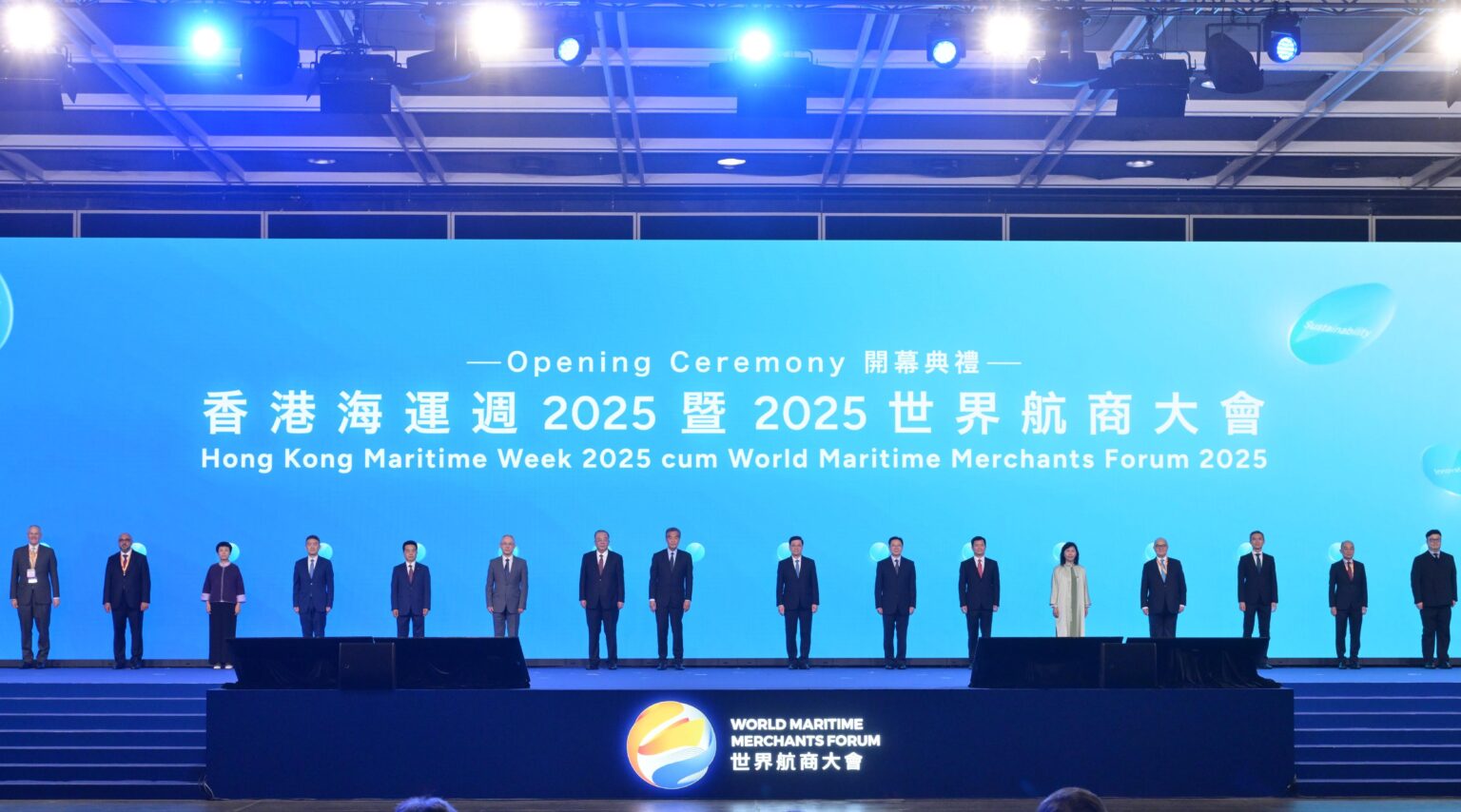
The closing weeks of 2025 saw Hong Kong reiterating the territory’s intentions of becoming a major green bunkering hub in the immediate term. Hong Kong Maritime Week, with IBIA’s own Convention as part of it, in late November had the transition to green fuels and the ability of HK to provide and incentivise them on a rapidly growing basis as one of its cornerstones.
Giving the flagship address, HK’s Secretary for Transport and Logistics, Mable Chan, said: “We are establishing Hong Kong into a green fuel bunkering and trading hub to create the bankable assets that capital seeks. Pioneering investments carry higher costs, and the full benefit of green investments may not be realised due to, for example, the low availability of green fuels. Our Action Plan on Green Maritime Fuel Bunkering, with its five core strengths and strategies and 10 concrete actions, provides exactly a definitive roadmap to propel the green fuel bunkering and trading development in Hong Kong. Leveraging our unparalleled access to the Chinese Mainland’s green fuel production, we are already delivering tangible, quick results from setting the national record for the largest single delivery of biodiesel at a Chinese port, to successfully transition into regularised LNG bunkering in Hong Kong waters. In a way, we are starting late but catching up fast.”
“Our focus now is on the next generation of fuels. We are pioneering the future with methanol, ammonia, and hydrogen. To accelerate this, we secured a duty exemption for methanol through legislation and will commence feasibility studies for ammonia and hydrogen bunkering soon this year. We recognise the first-mover disadvantage of high initial costs, and that is precisely why we launched the Green Maritime Fuel Bunkering Incentive Scheme in order to help our partners to de-risk and reward pioneering companies. Like different industries, our shipping partners also like recognition and rewards. Though it may be small to the big businesses, it really serves as a symbolism and demonstration of how much care and attention we show to the industry.”
“Next year, we will introduce legislation for a half-rate profits tax concession for the eligible commodity traders including those who trade in green maritime fuels. Coupled with our ongoing matchmaking events that connect Chinese Mainland enterprises with global end-users, we are not just building a fuel hub; we are creating the entire landscape and liquid marketplace required to finance and sustain the global fleet’s transition.”
She expanded on this in her welcoming address to IBIA as well, adding: “We make clear that Hong Kong will adopt a multi-fuel strategy, with the most commonly used or explored fuels such as LNG, biodiesel, methanol, ammonia and hydrogen being the fuels of choice. We then set out to build up a supply chain of such fuels in Hong Kong, from locating sources of green fuels in the proximity, that is the Chinese Mainland, which is conveniently right next to us and have been the largest supplier of such fuels by far, to developing storage facilities and providing bunkering infrastructure in Hong Kong. We are small, but I think we will be targeted and focused in providing, putting and rolling out storage facilities, infrastructure support, so as to allow Hong Kong to provide a miniature of the ecosystem that is advocated under the IBIA. Crucially, this strategy is already backed by concrete regulatory actions.”
During the course of HKMW, the SAR’s government also announced the establishment of the “Green Maritime Fuel Development Communication Platform” under the Transport and Logistics Bureau, a collaboration and communication platform to ease the development of green bunkering supply chain by linking various industry stakeholders. The launch of such a platform was one of the actions laid out in the territory’s green bunkering action plan set out the year before. At launch, the platform is being shared by 25 different organisations, including bunker suppliers Banle Energy and Chimbusco Pan Nation, shipping lines, terminal operators and energy companies, alongside Hong Kong’s main industry bodies.
The government says the platform will enable stakeholders to express their opinions on how green bunkering is developing in the SAR, simplify business discussion and co-operation, and will be open to any interested parties doing business in Hong Kong – and it will be backed up by government-organised networking events and other in-person support to build the territory’s green fuel offerings as quickly and viably as possible.
Obviously, mainland Chinese ports have their own green fuel offerings and strategies, some further along the road than Hong Kong’s – one of the reasons behind the territory’s specific strategic plan in the first place.
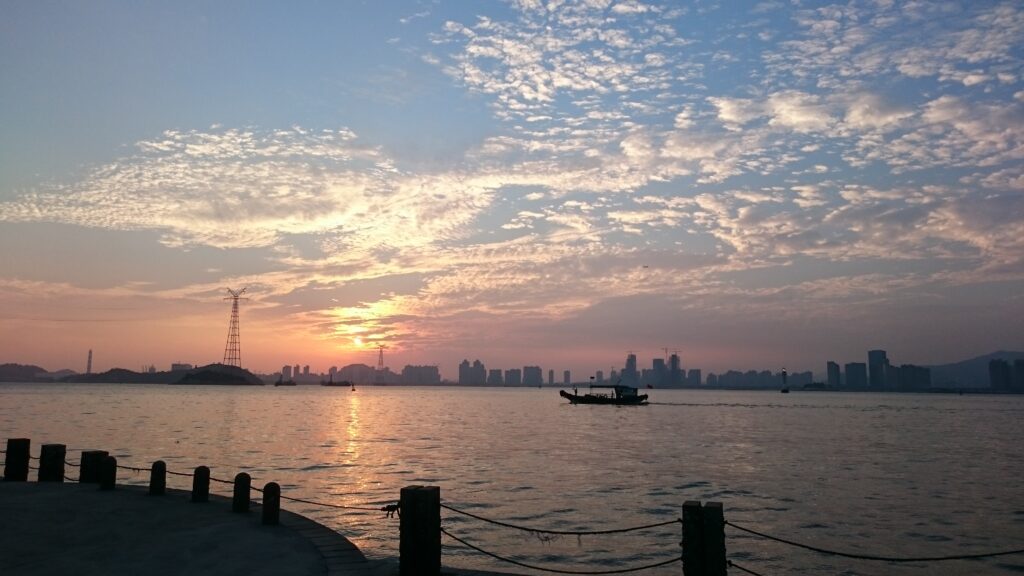
Further along the coast from the Pearl River, 2025 saw Xiamen make its first biofuel deliveries (of B24 and then B5 grade), and then its first international ship-to-ship LNG bunkering to the MSC Daria by a CNOOC LNG tanker in November.
In a statement, Xiamen’s Free Trade Zone said the operation “positioned Xiamen among the handful of cities in China equipped to provide bonded LNG bunkering services” and that “following the previous success in bonded biofuel oil bunkering, the implementation of this bonded LNG bunkering business further fills the gap in clean fuel supply services”. LNG bunkering in China has so far been limited to Shanghai, Ningbo, Shenzhen and Guangzhou. Guangzhou Port announced in November that it had completed its first simultaneous cargo and LNG bunkering operation, supplying 3,000 cbm of LNG to the MSC Thais at dock.
Citing the knock-on benefits in related shipping services to being able to supply new fuels, the port authority said that in the future it would “explore the dual-mode operation of ‘bonded and non-bonded’, promote innovations such as ‘cross-customs zone supply’ and ‘one ship and multiple supplies’”, and construct an LNG storage tank base in Nansha Port Area to increase the number of vessels able to take on LNG bunkers at once. The port also said that cooperation between the port clusters in the Guangdong-Hong Kong-Macao Greater Bay Area is expected to form an “LNG fuelling service alliance” to make the wider region a green shipping hub.
Xiamen is one of the 22 pilot cities for the promotion and application of biofuels announced by the National Energy Administration in 2024 as part of national moves to reduce air pollution. The Xiamen’s Free Trade Zone Administration issued its guidelines for trials of biofuel bunkering at the end of 2024, but uptake has been a slow process – as across China – and the range of fuels on offer is limited. The end of October saw the Ministry of Commerce announce new guidelines to boost green fuel trade that will allow wider bonded bunkering of alternative fuels as well as blending of more biofuels.
And other moves like the pilot ports scheme are underway to increase biofuel availability and uptake, some arising domestically and some with commercial backing from international firms.
In December, MOL announced a three-way MOU with Sinopec and Marubeni Corporation to establish long-term biofuel supply in China. Under the deal, MOL will work to expand the use of biofuel in China, while Sinopec and Marubeni will develop infrastructure such as storage and transportation facilities and supply ports, and ensure the stable availability of biofuel.
The Japanese shipping group said pushing greater adoption of biofuel was part of its environmental strategy aimed at achieving net-zero by 2050, and “represents a significant milestone toward achieving that target”.
Credit: Transport and Logistics Bureau
Caption: Hong Kong wants to make itself a green fuels hub.
18/02/2026
Caption: Xiamen is one of China’s pilot biofuel ports and has now joined the LNG club too.
get
in touch

Constructive Media
Constructive Media
Hornbeam Suite
Mamhilad House
Mamhilad Park Estate
Pontypool
NP4 0HZ
Tel: 01495 239 962
Email: ibia@constructivemedia.co.uk

On behalf of:
IBIA London Office
Suite Lu.231
The Light Bulb
1 Filament Walk, Wandsworth
London, SW18 4GQ
United Kingdom
Tel: +44 (0) 20 3397 3850
Fax: +44 (0) 20 3397 3865
Email: ibia@ibia.net
Website: www.ibia.net

Emails
Publisher & Designer: Constructive Media
ibia@constructivemedia.co.uk
Editor: David Hughes
anderimar.news@googlemail.com
Project Manager: Alex Corboude
alex@worldbunkering.net