
Keeping Safe
New guidance as fuel cell projects proliferate
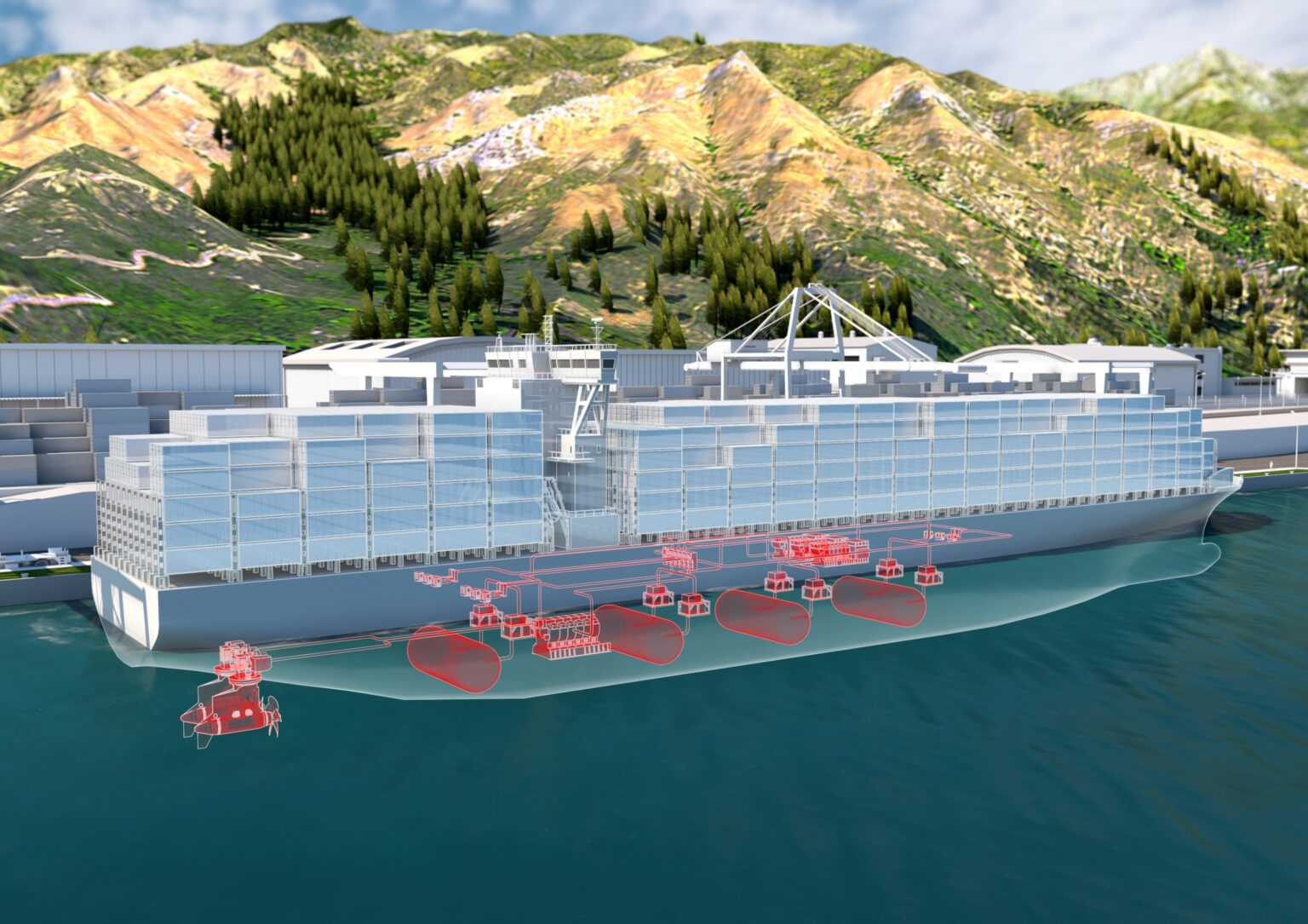
As hydrogen fuel cell projects move from pilot scale towards early commercial deployment, safety and regulatory clarity are becoming as important as technical performance. Recent guidance updates and new industrial collaborations underline both the momentum behind fuel cells in shipping and the caution that continues to shape their adoption.
Lloyd’s Register has published the 2025 edition of its Guidance Notes on Fuel Cells onboard Ships. The update reflects regulatory progress around the safe integration of fuel cells in marine environments, at a time when more projects are moving beyond demonstration and into detailed design. Industry observers generally agree that such guidance is a prerequisite for scaling fuel cell applications, particularly on larger vessels where power demand, redundancy and risk management requirements are more complex.
The revised guidance expands on system design, hazard identification, fuel storage interfaces and integration with conventional shipboard power systems. While the document does not mandate technology choices, it provides a clearer framework for designers, shipowners and yards assessing hydrogen fuel cells as part of future newbuilds or retrofit programmes. This is expected to reduce uncertainty during approval-in-principle discussions and class reviews, a recurring bottleneck cited by project developers over recent years.
Moving towards megawatt scale
Regulatory progress is coinciding with renewed industrial activity aimed at increasing the power output of marine fuel cells. ABB and HDF Energy have signed a joint development agreement to develop a high-power fuel cell unit for marine applications. The project targets megawatt-scale installations suitable for large seagoing vessels, including container feeder ships and liquefied hydrogen carriers.
The agreement builds on an earlier memorandum of understanding signed in 2020 and reflects a shared view that fuel cells must reach higher power levels to be commercially relevant beyond niche segments. Pilot installations are foreseen in the 2028 to 2029 timeframe, with serial production envisaged from 2030. While timelines remain indicative, the partners describe the collaboration as a significant step towards making fuel cells a viable option for deep-sea shipping.
Under the arrangement, France-based HDF will provide the fuel cell technology, drawing on its experience in large-format fuel cell systems, while ABB will supply power converters, power management systems and electrical and control integration. The two companies will also collaborate on technical specifications, conceptual design and commercial development.
As a seagoing technology, fuel cells are widely seen as offering substantial emissions reductions, particularly where green hydrogen is used as the fuel source. In such cases, operational emissions can be close to zero at the point of use. Many observers note, however, that the overall climate benefit remains closely linked to hydrogen production pathways and fuel availability.
Hybrid systems and auxiliary power
One of the near-term use cases identified by the partners is the replacement of diesel auxiliary gensets on board existing ships. In this configuration, fuel cells could provide low-emission auxiliary power while conventional engines continue to supply propulsion, reducing overall emissions without requiring a full redesign of the vessel.
Integration will be supported by ABB’s Onboard DC Grid™ power system, allowing fuel cells to operate alongside batteries and other power sources within a hybrid architecture. According to the companies, this approach increases operational flexibility, enabling fuel cells to run at optimal load while batteries absorb transient demand.
“We at HDF are very excited to combine our fuel cell knowledge with ABB’s marine systems integration expertise to provide a practical means of decarbonising the maritime industry,” said Hanane El Hamraoui, chief executive of HDF Energy. Rune Braastad, president of ABB’s Marine & Ports division, said the companies had already made “significant progress toward a viable solution for decarbonising larger vessels”, adding that the new agreement marked another important step forward.
A broader pattern
The ABB-HDF collaboration sits within a wider pattern of fuel cell activity across the sector. Projects involving eCap Marine and operators such as Samskip have demonstrated hydrogen fuel cells on short-sea routes, while shipyards in India have begun construction of their first green hydrogen-powered vessels. Concept studies for large passenger ships are also exploring fuel cells in combination with carbon capture and other low-emission technologies.
Image Credit: ABB
get
in touch

Constructive Media
Constructive Media
Hornbeam Suite
Mamhilad House
Mamhilad Park Estate
Pontypool
NP4 0HZ
Tel: 01495 239 962
Email: ibia@constructivemedia.co.uk

On behalf of:
IBIA London Office
Suite Lu.231
The Light Bulb
1 Filament Walk, Wandsworth
London, SW18 4GQ
United Kingdom
Tel: +44 (0) 20 3397 3850
Fax: +44 (0) 20 3397 3865
Email: ibia@ibia.net
Website: www.ibia.net

Emails
Publisher & Designer: Constructive Media
ibia@constructivemedia.co.uk
Editor: David Hughes
anderimar.news@googlemail.com
Project Manager: Alex Corboude
alex@worldbunkering.net