
Conflict Of Interest
A fresh impetus for ships to continue diverting around the Cape should mean that the expanding bunker market on both sides of the continent should remain buoyant for a while, writes John Rickards
It’s a little hard to make firm predictions for the African bunker market at the time of writing, as it’s entirely possible that, by the time World Bunkering goes to print, the US-Iran conflict will have ended (or the ceasefire tentatively in effect at the time of writing will have held up) and traffic will be swinging back to normal. And it’s equally possible given the nature of the conflict and its protagonists that something will have happened to spark it off again and any vessel that can will still be avoiding the region.
Whatever happens in the Gulf, and the Red Sea as a result, has a massive effect on the bunker market at key African hubs. Following the launch of US-Israeli strikes on Iran, March this year saw vessels calling for bunkers at Port Louis in Mauritius climb 42% to 294, and fuel volumes jump 57% to 109,708 tonnes for the month, according to figures from the Mauritius Ports Authority. The island state saw a similar jump during the months of Houthi attacks and diversions away from Suez – Mauritian bunker sales in 2025 hit 1m tonnes in 2025 – diversions that had only just begun to end for major lines before the conflict with Iran began. The current surge in demand has been such that while Mauritian bunker suppliers have been able to meet it so far, the MPA has warned that it might become tighter if the conflict went on and supply pressure increased and at the time of writing availability was reported as “very tight”.
There’s certainly plenty of competition for business from ships heading around the Cape instead of through Suez or looking to bunker en route somewhere other than Fujairah. The height of the diversion period has seen various international suppliers launch operations in western and southwestern Africa in particular.
Dubai-based Flex Commodities took the plunge at the end of November last year by launching physical supply at Walvis Bay in Namibia in conjunction with GAC’s investment arm. Via its barge Splendour Opal, the company offers offshore and anchorage deliveries; only cruise vessels are permitted to bunker at berth. The tentative returns to Suez initiated by ship operators like CMA CGM and Maersk in the month or so before the Iran conflict erupted might have left them feeling a little late to the party – but even if Middle East Gulf waters return to something like normal it now seems very likely that significant numbers of carriers will continue to take the longer but safer trip around the Cape.
Vitol Bunkers also expanded its African presence last year, bringing a barge to serve the overall WAF region from Dakar to Lomé, with initial deliveries of VLSFO and MGO. Vitol’s Ammar Hussaini said that “supplying bunkers by barge to the WAF market allows us to support our customers flexibly in the location and with the fuels that they need.”
Supply of fuel is one thing, but the supply of crude to refineries is another, and interruptions in some of the supply out of the Gulf and the risk of shortages (not to mention the reality of much higher costs) mean a need for others to pick up the shortfall. March saw Nigeria double the crude supply from state-run Nigerian National Petroleum Co to Dangote Refinery from five cargoes to ten, though Africa’s largest refinery is still reliant on increasingly expensive imports to come close to running at full capacity. That hasn’t stopped it ramping up exports to other African countries.
Angola has also been ramping up production to cushion the impact of price surges locally, state-owned Sonangol insisting it has the situation in hand, albeit with its refining and investments in production and upgrades at an earlier stage.
The country’s bunkerers are certainly well-placed to take advantage of ongoing diversions in the main east-west trades. Global Fuel Supply picked Luanda as the base for its first African supply operations last year, jockeying for business with local competitors like Famar Energies, Seago and Pumangol, backed by solid local production of VLSFO. GFS announced the addition of its first owned, rather than chartered tonnage to its Angolan operation in December. The upgraded and renamed MV Blue Alliance was fitted with an MFM – making it the first vessel in the Angolan market to have one – in the course of post-purchase drydocking in Dubai. The refit was fortunately completed just in time for the ship to clear the Gulf before the conflict started, and by the time World Bunkering goes to print, it should have started supply operations.
The country that continues to lag somewhat through a combination of lack of capacity, financial disputes, and disruption to services despite seeing all that traffic passing its doorstep is South Africa. While bunkering restarted in Algoa Bay last year, with suppliers including Glencore subsidiary Astron Energy, after shutting down in the wake of a string of vessel detentions by the South African Revenue Service in 2023 over claims of customs and tax breaches, it was promptly hampered again when SARS seized Astron’s chartered tanker Essien, one of the company’s three bunkering vessels, along with its cargo, in an ongoing legal case claiming that the Singapore-flagged ship wasn’t correctly declared as an import for VAT purposes. In late February this year, Astron announced it was bringing in a South African-flagged replacement, the Pearl Kate, to fill the gap.
Peninsula, in collaboration with longstanding South African bunkerer Linsen Nambi, entered the Algoa Bay supply market in October last year on the back of revamped regulations for ship-to-ship bunkering in South African waters, broadening its African operations from Mauritius and Egypt.
At the time, Guillermo Cancela, the company’s regional supply manager for the Middle East and Africa, said: “Algoa Bay is an area that, crucially, enables vessels to bunker without berthing, significantly reducing waiting times and lowering costs. Together with our established presence in Mauritius, Algoa Bay allows us to create operational synergies across both markets. By making key fuels available at these locations, we are opening doors for new opportunities and providing a reliable service to customers across the continent.”
Linsen Nambi CEO Durand Naidoo said: “Peninsula’s entry into this market is a strong vote of confidence in the South African bunker industry and highlights its long-term potential. The growth of Algoa Bay as a bunkering destination benefits the region and strengthens South Africa’s role in global shipping.”
In the context of the shift in bunker traffic towards southern and western Africa in the wake of the Red Sea crisis, this is another move that might have seemed a little slow in coming – albeit given the time it took for Algoa Bay to reopen and the authorities to settle on a new regulatory framework, largely unavoidable – but with a fresh wave of impetus to avoid active or potential conflict zones in the Middle East Gulf and near Iranian proxies like the Houthis, the timing may have been ideal.
The new rules for Algoa Bay are intended to protect the local marine environment in the wake of a string of incidents in the preceding years. They include stricter limits on weather conditions, pollution control and crew environmental training, and in Algoa Bay, ship operators will now have to deploy hydrophones to monitor marine mammals and African penguins. STS operations will be banned entirely within protected areas and within three nautical miles of the shore.
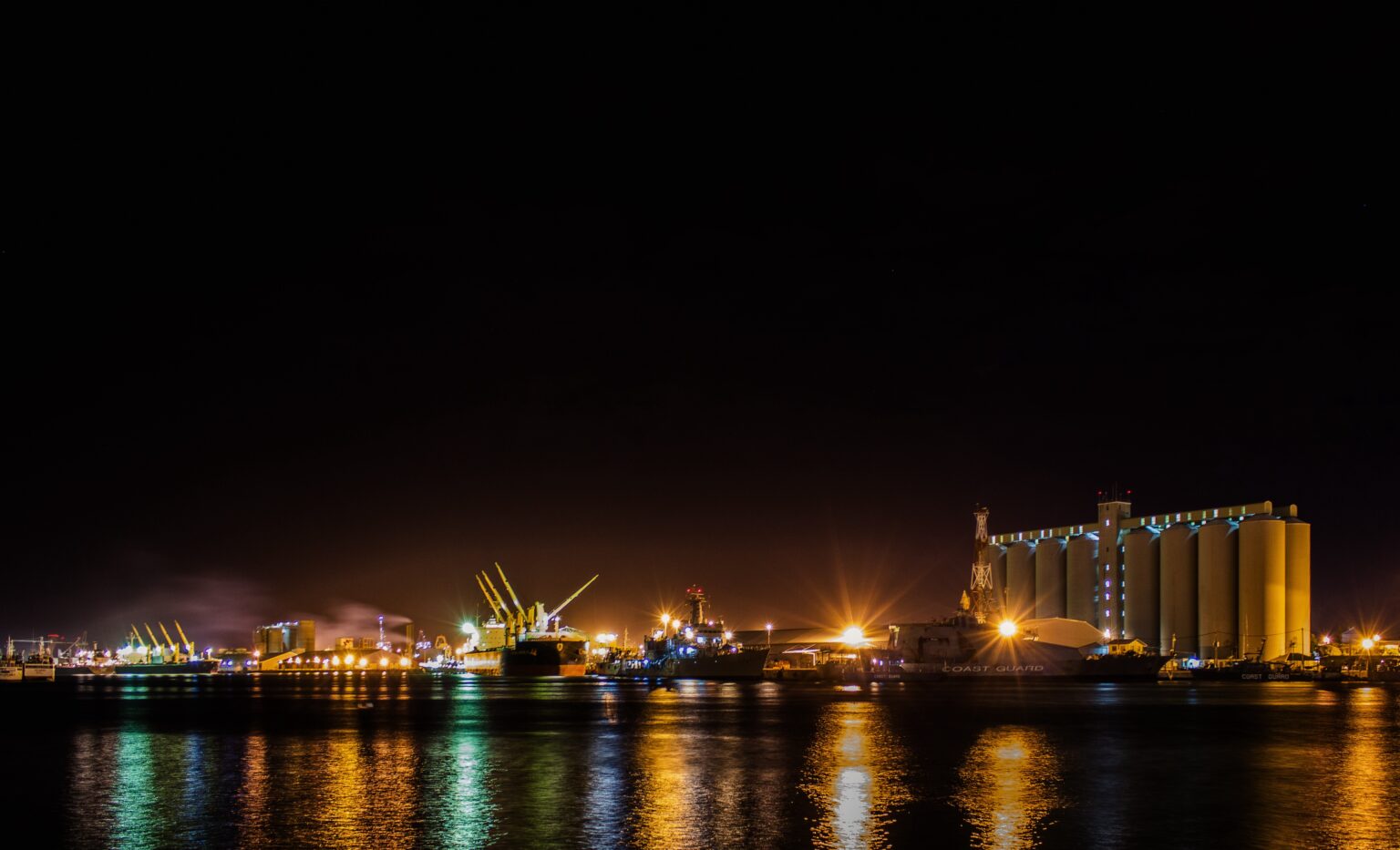
Image Caption: Mauritius has benefitted hugely from the traffic switch, but supply may get tighter. ©Johan Chan/CC-BY
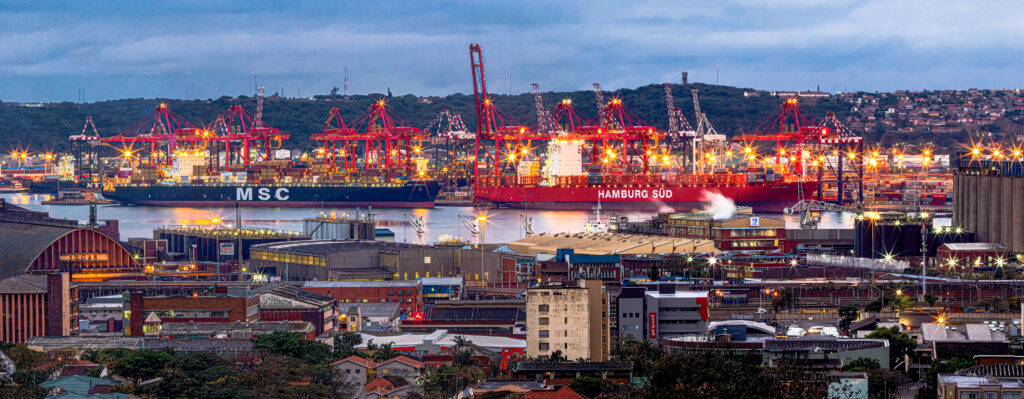
Image Caption: South Africa’s bunkering sector still faces challenges, even with Algoa Bay back offering fuel. ©Axel Bührmann/CC-BY
get
in touch

Constructive Media
Constructive Media
Hornbeam Suite
Mamhilad House
Mamhilad Park Estate
Pontypool
NP4 0HZ
Tel: 01495 239 962
Email: ibia@constructivemedia.co.uk

On behalf of:
IBIA London Office
Suite Lu.231
The Light Bulb
1 Filament Walk, Wandsworth
London, SW18 4GQ
United Kingdom
Tel: +44 (0) 20 3397 3850
Fax: +44 (0) 20 3397 3865
Email: ibia@ibia.net
Website: www.ibia.net

Emails
Publisher & Designer: Constructive Media
ibia@constructivemedia.co.uk
Editor: David Hughes
anderimar.news@googlemail.com
Project Manager: Alex Corboude
alex@worldbunkering.net