
Getting The Ducks In A Row
The necessary infrastructure and certification for ammonia bunkering is developing rapidly
Ammonia has been discussed as a future marine fuel for several years, but the industry is now moving from concept work into the more difficult phase of practical implementation. The question is no longer only whether ammonia can be used as a bunker fuel. It is whether ports, suppliers, shipowners, engine makers, class societies and regulators can put enough of the necessary pieces in place at the same time.
A series of developments through the opening months of 2026 suggests that work is accelerating. They include the first commercial green ammonia bunkering operation in South Korea, new supply-chain agreements in Singapore, the US Gulf Coast and Northwest Europe, further class approvals for ammonia-fuelled ship designs, and factory testing of onboard ammonia fuel supply systems.
The numbers remain modest compared with LNG and methanol, but they are no longer theoretical. TradeWinds reported in April that there were 53 ammonia dual-fuel vessels on order, plus several smaller pilot vessels. That compares with DNV’s statement last year that 39 ammonia-capable ships, mainly ammonia carriers and bulkers, were on order by August 2025. Lloyd’s Register also recorded six ammonia-fuel capable vessel orders during 2025.
From Trial To Commercial Supply
A significant development came at Ulsan. On 23 April 2026, LOTTE Fine Chemical supplied around 600 tonnes of clean ammonia to a 45,000 cbm ammonia-powered vessel built by HD Hyundai Heavy Industries, alongside a berth. South Korea’s Ministry of Oceans and Fisheries described the operation as a world-first demonstration for an ammonia-propelled medium gas carrier, while LOTTE presented it as the first commercial green ammonia bunkering operation.
The Ulsan operation matters because it links several stages of the chain. The ammonia was produced from renewable energy by Envision in Inner Mongolia and imported by LOTTE in March. It was then stored and supplied as marine fuel. The fact that it moved through cross-border trade, port infrastructure and final bunker delivery gives the industry a more concrete example of how ammonia fuel supply may work in practice.
The caveat is also clear. One operation does not create a global market. Ammonia remains highly toxic, and its use as bunker fuel requires strict procedures, trained personnel, emergency response capability and well-defined responsibilities between ship and shore. The Ulsan case is therefore best seen as a practical reference point, not a finished model.
Singapore Builds The Last Mile
Singapore has also moved quickly. On 17 March 2026, Sumitomo Corporation, “K” Line and NYK Bulkship entered into a memorandum of understanding to conduct a Front-End Engineering Design study and explore ownership of a new-build ammonia bunkering vessel for Singapore. The work will cover basic design, technical specifications, safety and operational requirements, and the ownership model for the Singapore ammonia bunker market.
The project sits within the wider ammonia value-chain initiative led by the Maritime and Port Authority of Singapore and the Energy Market Authority. In October 2025, MPA and EMA appointed a Keppel-led consortium to take forward the next phase of a low- or zero-carbon ammonia project on Jurong Island for power generation and bunkering. Sumitomo is to lead the FEED study for the bunkering proposal.
In April, another Singapore-focused partnership was announced. NYK Line, Golden Island and Yara Clean Ammonia signed a non-binding agreement to explore the marketing and supply of low-carbon ammonia as marine fuel in Singapore. The partners said they had been in discussions since early 2024 and were aiming to begin operations within this decade. Singapore’s position is significant: NYK noted that the port supplies approximately one-fifth of global marine fuel demand.
A further step came on 23 April, when Sumitomo, “K” Line and NYK said their proposed ammonia fuel supply demonstration project in Singapore had been selected for a Japanese Ministry of Economy, Trade and Industry grant. The demonstration is intended to trial ship-to-ship ammonia fuel supply using a bunkering vessel meeting Singapore Government requirements. The partners said the work would help develop safety standards and operational procedures before commercial services are launched.
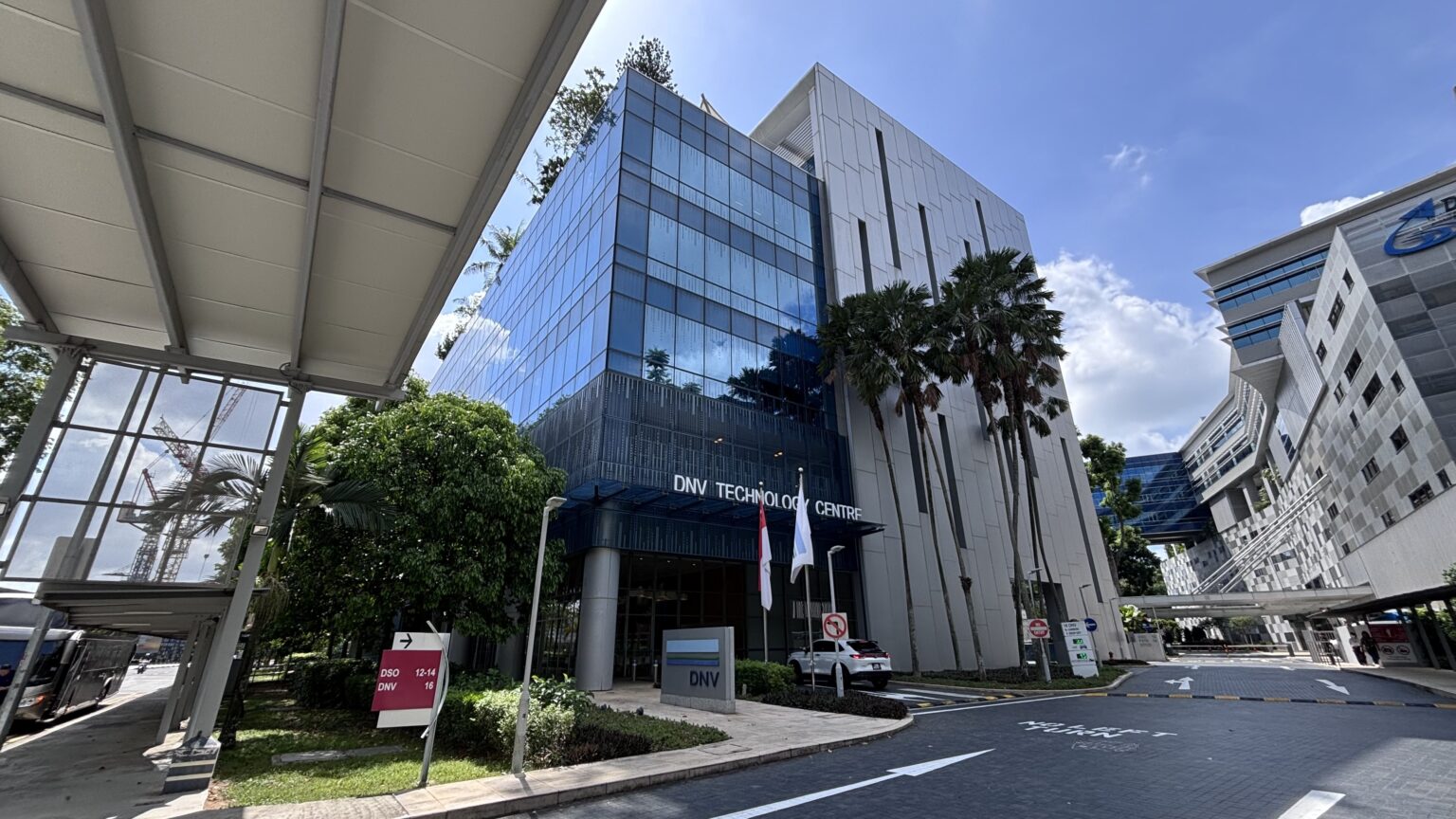
This follows work by DNV at its Centre of Excellence for Maritime Decarbonization & Smart Shipping Asia Pacific (COE) on safe ammonia bunkering guidelines developed for the Global Centre for Maritime Decarbonisation.
Supply Chains Beyond Asia
Outside Asia, CF Industries, Trafigura and TFG Marine have signed an MoU to support the adoption of low-carbon ammonia as a marine fuel. The collaboration will initially focus on the US Gulf Coast and Northwest Europe, bringing together CF Industries’ low-carbon ammonia production and export capabilities at Donaldsonville, Louisiana, Trafigura’s commodity logistics and market development expertise, and TFG Marine’s bunker supply network.
The agreement is important because it addresses one of the recurring problems for alternative fuels: supply and demand have to develop together. Shipowners are reluctant to order ammonia-capable tonnage without confidence in fuel availability, while fuel suppliers need a credible demand signal before committing capital to terminals, bunker vessels and logistics. The CF, Trafigura and TFG Marine framework is therefore less about a single physical project and more about aligning production, transport, last-mile delivery and customer demand.
Certification Moves Forward
Technical certification is advancing in parallel. On 22 April, ClassNK issued an Approval in Principle for an ammonia-fuelled Panamax bulk carrier equipped with an International Maritime Organization (IMO) Type B independent fuel tank developed by Planning and Design Center for Greener Ships. ClassNK said it was the world’s first AiP for a ship with Type B tanks installed on the exposed deck.
This is a practical design issue. Type C tanks have commonly been used for alternative-fuel ships because of productivity and cost advantages. However, for ammonia-fuelled vessels requiring larger fuel capacity, Type B tanks are gaining attention because they can offer better cargo efficiency and more flexibility in outfitting. For bulkers, where cargo capacity is central to the business case, those design details may affect whether ammonia becomes commercially acceptable.
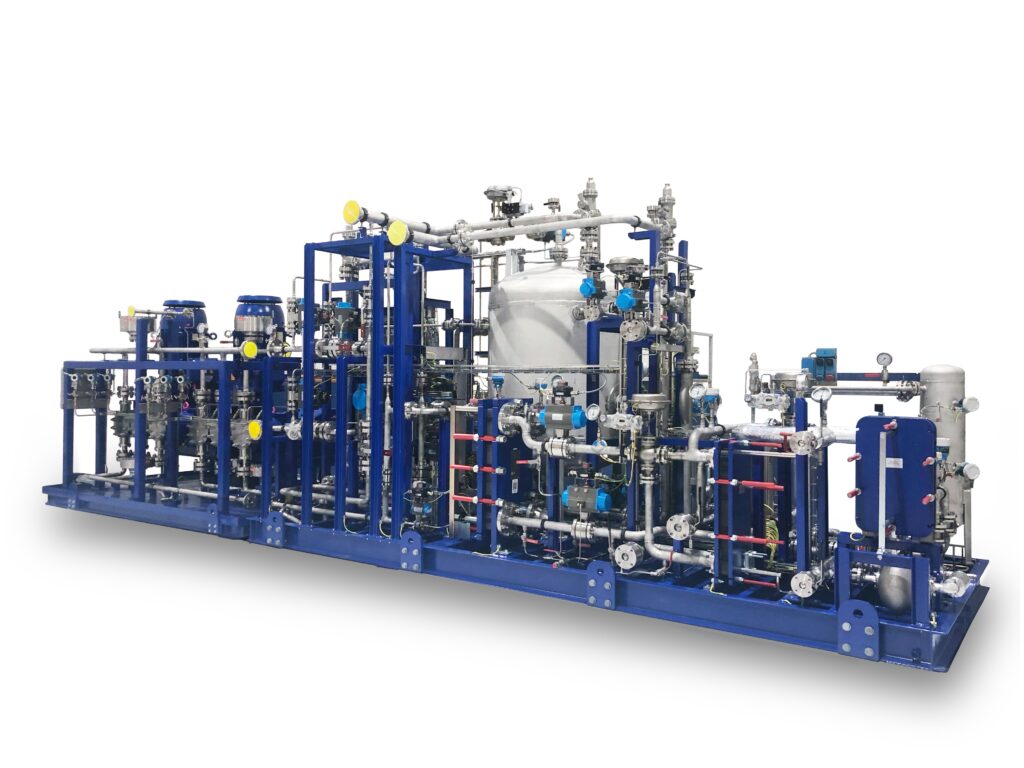
Alfa Laval has completed a class-certified Factory Acceptance Test for its FCM Ammonia fuel supply system, confirming the unit’s readiness for commercial integration with two-stroke ammonia-fuelled engines. The system is the first of seven ordered for Tianjin Southwest Maritime’s dual-fuel ammonia carriers.
The significance of such testing should not be underestimated. Ammonia bunkering depends not only on port infrastructure and fuel availability, but also on the safe integration of the fuel into propulsion systems. For bunker suppliers, any weakness in onboard handling systems would quickly become a supply-chain risk.
Engines And Ships Enter The Picture
Engine technology is also becoming more tangible. Wärtsilä announced on 27 January that it will supply its Wärtsilä 25 Ammonia solution for a new cargo vessel for Norway-based Skarv Shipping Solutions.
The ship will be built at Huanghai Shipyard in China and will be the first newbuild to use the solution. The package includes the engine, AmmoniaPac fuel gas supply system, Wärtsilä Ammonia Release Mitigation System and selective catalytic reduction equipment. Equipment delivery is scheduled to begin in the fourth quarter of 2026.
Wärtsilä says total greenhouse gas emissions can be reduced by at least 90% when the engine runs on sustainable ammonia compared with equivalent diesel engines. That claim depends on the fuel pathway. It will not apply to all ammonia, and this distinction is likely to become increasingly important as regulators, charterers and cargo interests look more closely at lifecycle emissions.
In South Korea, Exmar has named the ammonia dual-fuel mid-size gas carriers Antwerpen and Arlon. The 46,000 cbm vessels, developed with HD Hyundai, are described by Exmar as the world’s first ocean-going vessels capable of using ammonia as fuel. The vessels have 45,000 cbm cargo tanks and two 500 cbm deck tanks, and Exmar says the technology can cut CO₂ emissions by up to 90% during navigation.
A Market Still In Formation
The overall picture is one of acceleration, but also of uneven progress. DNV data reported by Manifold Times showed that only five alternative-fuel vessel orders were placed in March 2026, with first-quarter alternative-fuel ordering down around 40% year on year and dominated by LNG-fuelled container vessels. That does not undermine ammonia’s long-term prospects, but it does indicate that owners remain cautious.
Many observers would argue that this caution is justified. Ammonia offers the attraction of no CO₂ emissions at the point of combustion, but it brings safety, cost, availability and emissions-accounting questions. A bunker buyer will need to know not only where fuel is available, but also whether it is low-carbon, how it is certified, what liabilities apply during transfer and how crew and port personnel are protected.
What has changed is the quality of the evidence. Ammonia bunkering is no longer only a set of concept drawings and conference presentations. It now includes a commercial port-to-ship supply operation, Singapore-based vessel and marketing initiatives, major producer-trader-bunker supplier collaboration, class-approved ship designs, certified fuel supply equipment and newbuild engine orders.
That does not mean all the ducks are in a row. It does suggest that they are starting to gather in the same place.
get
in touch

Constructive Media
Constructive Media
Hornbeam Suite
Mamhilad House
Mamhilad Park Estate
Pontypool
NP4 0HZ
Tel: 01495 239 962
Email: ibia@constructivemedia.co.uk

On behalf of:
IBIA London Office
Suite Lu.231
The Light Bulb
1 Filament Walk, Wandsworth
London, SW18 4GQ
United Kingdom
Tel: +44 (0) 20 3397 3850
Fax: +44 (0) 20 3397 3865
Email: ibia@ibia.net
Website: www.ibia.net

Emails
Publisher & Designer: Constructive Media
ibia@constructivemedia.co.uk
Editor: David Hughes
anderimar.news@googlemail.com
Project Manager: Alex Corboude
alex@worldbunkering.net