
Going Beyond Gas Carriers
LR says established infrastructure and renewable variants could make LPG a viable fuel for a wide range of vessels, although engine availability and regulation remain constraints
Lloyd’s Register (LR) has strengthened the case for LPG as a marine fuel, arguing that its established technology, global supply chain and lower capital costs give owners a practical route to near-term emissions reductions.
LPG, or liquefied petroleum gas, consists mainly of propane and butane, stored as a liquid under pressure, with the precise blend affecting its storage and handling characteristics rather than fundamentally determining engine efficiency.
The classification society’s updated Fuel for Thought: LPG report, published with the World Liquid Gas Association in May 2026, stops short of presenting fossil LPG as a zero-carbon solution. Instead, it describes a transition pathway that is already proven aboard gas carriers and could eventually extend into container ships, bulk carriers and other sectors.
Constantinos Chaelis, LR’s Global Gas Segment Director, said LPG combined “mature infrastructure, a growing dual-fuel fleet and clear emissions advantages” with a route to compliance today. He argued that renewable LPG, wider retrofit options and onboard carbon capture could extend its usefulness, although all three elements remain at differing stages of commercial and technical maturity at present.
LR says fossil LPG produces about 97% less sulphur oxides, 90% less particulate matter and approximately 20% less carbon dioxide than heavy fuel oil. On a well-to-wake basis, greenhouse gas emissions may be up to 17% below marine gas oil, although performance will vary with production and supply chain.
The practical case rests heavily on scale. Global seaborne LPG trade rose 5% to a record 145 million tonnes in 2025. LR counted 1,758 LPG carriers in service at December 2025 and identified about 500 terminals that could potentially support bunkering for other vessel types, subject to local regulation, safety assessment and sufficient demand.
Commercially, the LR report estimates that converting a conventional engine to LPG dual-fuel operation could cost between US$9.5 million and US$27 million, compared with US$12 million to US$33 million for LNG. LPG storage also requires less space than LNG, although about 1.5 times the tank volume of marine diesel oil.
Evidence of continuing uptake remains concentrated in gas shipping. LR recorded 24 additional LPG-capable vessel orders during 2025. BW LPG, which has built extensive operating experience through dual-fuel retrofits, said in March 2026 that its LPG-powered VLGCs had delivered fuel cost savings of about US$5,000 a day during 2024.
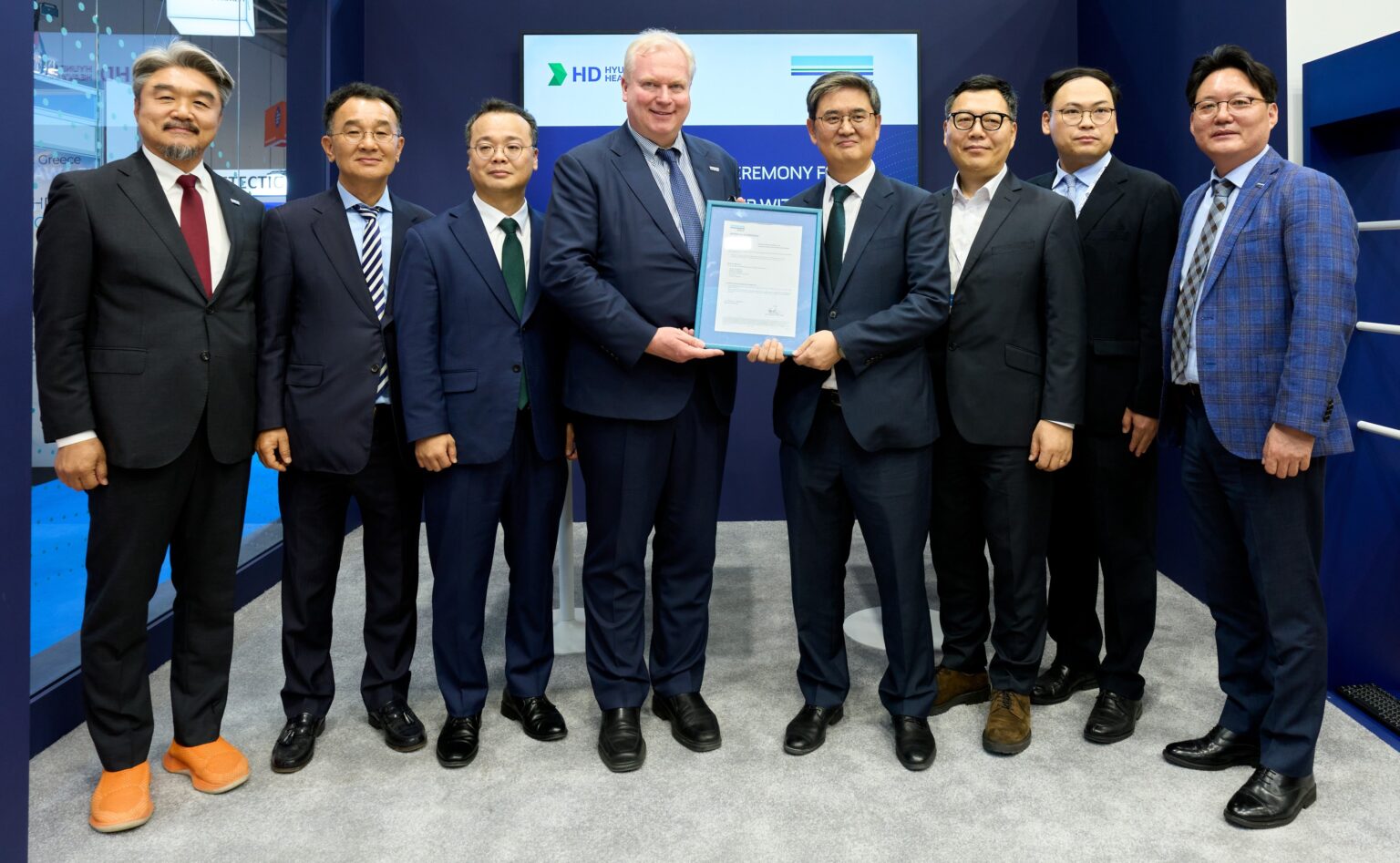
There are early signs of interest beyond that segment. In June 2026, DNV awarded approval in principle to HD Hyundai Heavy Industries for a 1,400 TEU LPG dual-fuel container ship design. DNV said the concept offered smaller container operators a credible route to lower emissions while retaining flexibility for future net zero fuels.
Regulation is progressing but remains incomplete. IMO approved interim safety guidelines for ships using LPG fuel in June 2023, followed in July 2024 by separate guidance covering LPG carriers using cargo as fuel. The provisions address arrangements, installation, control and monitoring, reflecting hazards including LPG vapour’s tendency to sink and accumulate in low spaces.
Longer-term claims depend on renewable supply. Renewable LPG and bio-LPG are chemically identical to fossil LPG and can be used without modifying existing systems. LR says lifecycle reductions of up to 80% may be possible, depending on feedstock, and cites projections that renewable production could meet half of global LPG demand by 2050.
For now, LPG engine choice beyond low-speed two-stroke applications remains limited, bunkering rules are uneven and renewable volumes are small. LPG therefore offers a credible, available emissions-reduction option, but its wider role will depend on cross-sector orders, regulatory standardisation and demonstrable growth in genuinely low-carbon supply.
Image Credit: Vidar Dolonen, Regional Manager Korea & Japan, DNV Maritime, presented an AiP certificate to Hongryeul Ryu, CTO of HD Hyundai Heavy Industries at Posidonia
get
in touch

Constructive Media
Constructive Media
Hornbeam Suite
Mamhilad House
Mamhilad Park Estate
Pontypool
NP4 0HZ
Tel: 01495 239 962
Email: ibia@constructivemedia.co.uk

On behalf of:
IBIA London Office
Suite Lu.231
The Light Bulb
1 Filament Walk, Wandsworth
London, SW18 4GQ
United Kingdom
Tel: +44 (0) 20 3397 3850
Fax: +44 (0) 20 3397 3865
Email: ibia@ibia.net
Website: www.ibia.net

Emails
Publisher & Designer: Constructive Media
ibia@constructivemedia.co.uk
Editor: David Hughes
anderimar.news@googlemail.com
Project Manager: Alex Corboude
alex@worldbunkering.net