
READY TO RETURN
Main trade traffic returning to Suez would be a boost for the region, and planning for the future is very much the name of the game, reports John Rickards
At the time of writing, the situation in the Red Sea has eased and the first major lines are talking about returning to using Suez – albeit not always with the same concrete dates and level of confidence as the Suez Canal Authority, which is understandably extremely keen to present itself as back to business – but we’re still waiting to see actual significant upticks in major traffic.
However, if lines like CMA CGM and Maerskdo begin to return, there will inevitably be a knock-on bonus for bunkerers in the Eastern Med either directly or from transshipment of main loop cargoes.
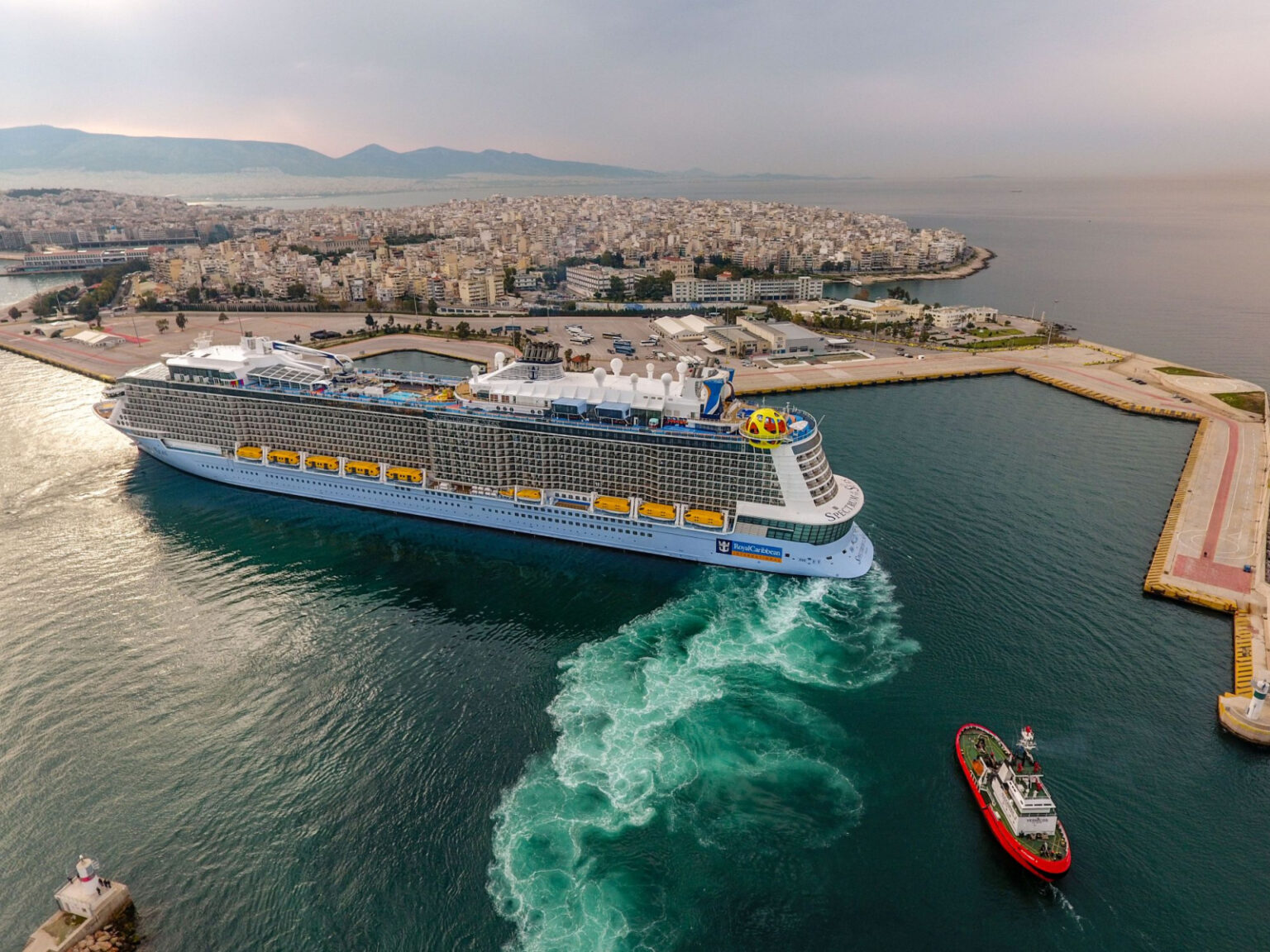
As it stands, the region’s largest destination port has managed to hold broadly steady in recent times in terms of overall demand, with continued container and cruise calls shoring up a shortfall in other sectors. Piraeus might have seen a Q3 decline in box throughput, down nearly 15% year on year to 978,711 TEU, but in the first half of the year it was up 5% to a solid 2.05m TEU.
The port’s CEO Su Xudong said: “The results for the first half of 2025 demonstrate the stability and capacity of the Port of Piraeus to operate effectively in an international environment marked by challenges. Our development is closely linked to the green transition strategy we are implementing, with targeted investments and initiatives that reduce our environmental footprint and strengthen sustainable operations. The consistent recognition of PPA as one of the most sustainable companies in Greece, along with our actions within the ESG framework, confirm our commitment to balanced economic and social development. Our goal is to continue investing steadily in the modernisation of the port and the improvement of services, while contributing to the economy, society and the environment.”
The port launched biofuel bunkering at Piraeus Container Terminal earlier in 2025 after a shift in Greek fuel regulations and this was followed in July by a first pilot fuel delivery to a Norwegian Cruise Line vessel under the company’s “Sail & Sustain” strategy for southern Europe. In December, World Fuel Services and Greek supplier, EKO carried out their first, and one of the first nationally, commercial biofuel bunker deliveries in Piraeus to the Norwegian Viva following extensive trials with the fuel in other parts of Europe.
WFS’ senior director for cruise and energy transition Kimberly Westmoreland said: “This collaboration demonstrates how the cruise industry can access certified alternative fuels right now – not someday. By uniting our global supply network with strong local execution, we’re able to support forward-looking operators like Norwegian Cruise Line Holdings turn low carbon fuels access into meaningful progress on decarbonisation.”
“This biofuel operation in Piraeus reflects the kind of pragmatic progress we’re making under our Sail & Sustain program,” said Lory Urdaneta, NCL’s senior director for energy strategy. “It’s one more way we’re scaling lower-carbon solutions across our fleet. Collaborating with partners like World Fuel and EKO enables us to accelerate our decarbonisation efforts and extend our sustainability impact across new geographies.”
EKO’s marine fuels manager Chrisanthopoulos Konstantinos added: “EKO is proud to contribute to this important milestone in Greece. By supplying waste-based biofuels locally, we are demonstrating the readiness of the market and the potential for wider adoption across the Mediterranean.”
With Suez hopefully seeing traffic recover as the security situation in the Red Sea stabilises, Port Said is also looking to alternative fuels and decarbonisation as part of Egypt’s push for green energy.
In November, the country’s Ministry of Petroleum and Mineral Resources signed an MOU with the Suez Canal Authority to establish LNG liquefaction, storage and bunkering capabilities in the Al-Raswa area of Port Said.
The LNG facility, which should have an initially guaranteed market of the SCA’s tug and ferry fleet, converted to LNG in line with the authority’s aim of being “fully green” by 2030, has been developed in cooperation with South Korean institutions as well as Egypt’s own EGAS, which helped lay out the feasibility and costs of the project and has now “reached the final stages”. The MOU is to secure gas supplies and the technical expertise required to run the plant.
Minister Karim Badawi praised the SCA, saying the project would be an important part of the transformation of the Canal into a green shipping corridor.
A return to traffic through Suez would be a major benefit to the region’s bunker suppliers, drawing business back from the African coast. A greater array of ports able to handle significant cargo and newer generations of ships won’t in itself drive trade but will share it around and offer opportunities to bunkerers able to shift coverage from congested hubs.
The southern Turkish port of Mersin finished the first phase of its US$455m terminal expansion in mid-2025, bringing its maximum annual throughput up from 2.6m TEU to 3.6m TEU, and enabling it to handle two ultra-large container vessels at once. The expansion is due to be completed in 2026. The regional CEO of the port’s operator Vincent Ng said: “We remain firmly committed to investing in the future of Mersin Port. As part of PSA’s ‘Node to Network’ strategy and our Group’s transition to net zero emissions by 2050, MIP stands as a key example of our dedication to operational excellence and sustainable development. We will continue the strive to create long-term value for the region and contribute meaningfully to Türkiye’s economic development.”
The terminal didn’t see the first visit by a ULCV until October, when the 19,313 TEU MSC Ditte made the inaugural call.
Speaking at the ceremony, Singapore Embassy Chargé d’Affaires, Ann Margaret Mathew said: “We are eager to see the completion of the EMH-2 Terminal and its ability to accommodate much larger container vessels such as the MSC Ditte. In a period of trade tensions due to global issues, we see MIP continuing to contribute to strengthening economic development links and a robust global supply chain. This investment is a symbol of PSA’s commitment to MIP’s future. It also demonstrates Singapore’s confidence in Türkiye’s long-term growth prospects.”
Cyprus is also in line for upgrades to its port offerings. Vassiliko secured nearly €19m in EU funding for expansion, modernisation, and clean energy transition which would see its annual capacity reach nearly 1,800 ships. The Ministry of Transport, Communications, and Works described the upgraded port as “evolving into a cornerstone of geostrategic importance for Cyprus and the wider region, combining commercial, energy, military, and environmental potential within an ambitious yet realistic plan with a European dimension.”
Limassol, meanwhile, should be getting provision for onshore power. In the summer of 2025, the Cyprus Ports Authority announced a contract with DBA to study setting up shoreside power in Limassol’s New Port in terms of its technical, economic and environmental aspects, and the required infrastructure changes, again with the help of EU funding.
The CPA said: “The Cyprus Ports Authority, in the context of its mission to continuously upgrade port infrastructure and enhance environmental sustainability, considers the implementation of the OPS as a key tool for achieving the climate objectives of the country and the European Union.”
Shore power provision is of particular interest to cruise lines looking to cut their emissions; similar installation in Valletta last year has seen MSC, amongst others, touting its advantages, and the EU’s “Fit for 55” plan requires all “essential” European ports to have it by 2030.
Cyprus has also seen expansion in the local bunker industry in the closing stages of the year and the promise of renewed trade through Suez, with Island Oil adding a second tanker to its bunkering operations and Singapore-based Uni-Fuels opening its first European office in Limassol.
And if – which may be a big “if” – the situation in one of Cyprus’ near-neighbours can remain steady, it could be that the island’s bunkerers might see a fresh source of passing trade in the long term. Syria remains a country deeply scarred by war a year after the fall of the Assad regime, and while the government of Ahmed Al-Sharaa has brought some stability and an end to international sanctions, the battered country needs investment and solid foundations for the future if it’s to rebuild and to see its internal tensions ease properly.
July’s news that DP World had signed a 30-year deal worth US$800m in total to develop, modernise and operate its second-largest port of Tartus, was therefore hugely welcome. DP’s stated ambition at the time of inking the deal was to “upgrade the port’s infrastructure and position it as a critical regional trade hub connecting Southern Europe, the Middle East and North Africa.” The project will include new infrastructure, advanced cargo-handling equipment, and digital systems to improve efficiency across the port’s container and general cargo terminals, and will enable Tartus to handle general cargo, containers, breakbulk, and ro-ro traffic.
DP World group CEO Sultan Ahmed bin Sulayem said: “This agreement reflects our long-term commitment to enabling global trade and creating resilient supply chains. We see strong potential in Tartus to serve as a vital trade gateway and look forward to strengthening regional connectivity and economic opportunity through this investment. We believe in the power of trade to help drive long-term stability and prosperity for Syria and the region.”
Qutaiba Ahmed Badawi, Chairman of Syria’s General Authority for Land and Sea Ports, said: “This agreement marks an important step forward for the Port of Tartus and Syria’s maritime sector. Partnering with DP World will allow us to modernise and strengthen the efficiency of our trade infrastructure as we continue to rebuild key trade lanes, support the national economy and provide more opportunities for the Syrian people. The agreement reflects our shared vision to transform Tartus into a strategic gateway linking Syria with regional and international markets and it will pave the way for sustainable growth for years to come.”
At the time of writing some months later, the project has advanced as far as appointing a port CEO, Fahad Al Banna, ex-container ops VP at Jebel Ali, bringing a new tug into service and launching into what DP World refers to as “a comprehensive assessment of the port’s infrastructure including equipment, quay readiness and yard and warehouse facilities. This phase includes technical surveys, operational studies and design planning to develop a detailed redevelopment roadmap.”
In the immediate term, the focus will be on dredging port access channels, basins and berths to achieve optimal design depths. Along with the rehabilitation and replacement of existing handling equipment, together with the introduction of new specialised assets, these works will enable the port to meet growing demand for bulk and breakbulk cargo as Syria slowly rebuilds.
In the medium term, the redevelopment programme will include upgrading port infrastructure and superstructure, expanding handling and storage capacity and investing in bulk handling systems as well as new containerised and non-containerised facilities.
DP World says these initiatives will position Tartus Port as a “key maritime and logistics hub” in the Eastern Mediterranean, “supporting both regional and international trade flows and contributing significantly
Image Caption: Piraeus has held steady, thanks in part to its cruise business. Image Credit: Piraeus Ports Authority
09/02/2026
get
in touch

Constructive Media
Constructive Media
Hornbeam Suite
Mamhilad House
Mamhilad Park Estate
Pontypool
NP4 0HZ
Tel: 01495 239 962
Email: ibia@constructivemedia.co.uk

On behalf of:
IBIA London Office
Suite Lu.231
The Light Bulb
1 Filament Walk, Wandsworth
London, SW18 4GQ
United Kingdom
Tel: +44 (0) 20 3397 3850
Fax: +44 (0) 20 3397 3865
Email: ibia@ibia.net
Website: www.ibia.net

Emails
Publisher & Designer: Constructive Media
ibia@constructivemedia.co.uk
Editor: David Hughes
anderimar.news@googlemail.com
Project Manager: Alex Corboude
alex@worldbunkering.net